| |
 Opinion Opinion
from
Ken Burnett, writer, publisher and occasional fundraising consultant.
In the vastly unequal relationship that is the client/agency norm, arrogant, ignorant clients destroy more good work and waste more money, passion and enthusiasm than a hundred broken marriages. It is the overwhelming tragedy of our profession.
Readers’ comments
Anyone who thinks it is easy or automatic to be a good client needs his or her head examined.
More blogs on fundraising and communication
• Welcome to the Happy Bubble.
• Carpe diem: Seize the oppoortunity ere it is lost: and Reckless opportunism or the dead hand of risk-aversion.
• Is it time for Twitter suicide?
• The future of fundraising.
• Is direct mail dead?
• The donor pyramid isn’t well either.
• The transformational fundraising entrepreneur.
• The indispensable guard book.
• Prepare for the fundraising trustee.
Tales from The Field by the River:
• Animal intelliegence, • The adventure of the five white bulls,
• Rough sex down by the river.
And also a special
from the distant past, A Sudan safari.
 Books by Ken Books by Ken
Other feature articles
Home page
Visit SOFII for more from Ken Burnett:
The essential foundations of fundraising.
The 11 pillars of fundraising wisdom.
Three little words lost.
Top tips for the new head of donor development.
Plus reviews of Type & Layout, by Colin Wheildon and Digital Giving, by Richard C. McPherson.
And while on SOFII read about the adventures of new trustee Warren, in What makes an effective board
part 1.
part 2.
|
|
Just before Christmas I was lunching with a hugely respected ‘grand old man of British fundraising’, one of the architects of the UK’s Institute of Fundraising and co-creator of two seminal, ground-breaking capital campaigns of recent British fundraising history. Over a glass of port we were talking about a particular client we had both shared, when he said to me, without hesitation, ‘This was the most satisfactory relationship I ever had with a client.’
I was obliged to agree. This same client that we were talking about would also top my list of ‘most effective clients.’
Oh yes, don’t be surprised. Even if it’s unwritten, every agency and consultancy will have such a list and will review and amend it regularly. Few things are more important to us.
This particular client would have topped my list consistently over the past quarter of a century, and that of my port-drinking buddy too. Plus the lists of a few others that I know of and, I’m sure, a few more that I don’t.
I began idly collecting together some of the many and diverse things that I think make a truly great client. Because only a charlatan would disagree that it’s the chemical reaction created when a good client and a good agency combine that brings about really great work. This explains why a great agency team produces great work for some clients and mediocre, even bad, work for others. The first, most essential member of the dream team is a truly great client.
Logically, this led to me thinking about the best team that I could assemble, to provide the best of the best clients with the best possible service, the means to consistently produce truly earth-shatteringly good work to lay before his, or her donors. Since (and even before) Burnett Associates opened its doors in 1982 as the first agency in Europe specifically for the promotion of good causes, a valuable body of skills and expertise has developed and grown up in the UK, to support charity clients. And it’s getting better all the time. Are the clients, I found myself wondering, developing at the same rate?
I confess that the ‘Dream Team’ listed opposite is written mostly from the agency’s rather than the consultant’s point of view. I worried long about whether or not I should name names. Originally I did, but it proved impossible to be both comprehensive and objective so I’ve confined myself to broad generic descriptions of the kind of people I’d like to see batting for my charity; helping us to produce the best work we possibly can. For economic reasons many of the roles opposite would need to be combined. But that’s no problem as in agencies, such talented types abound.
So what are the qualities that make a truly great client?
Courage, of course. Professionalism. Understanding. Sympathy and empathy. Vision is needed too. And judgement, to back hunches loaded against success. Honour, that respects the right of others to fair pay for their work and fair treatment for their workers. Punctuality. Even-handedness. And appropriate humility: a rare one, this. In the vastly unequal relationship that is the client/agency norm, arrogant, ignorant clients destroy more good work and waste more money, passion and enthusiasm than a hundred broken marriages. It is the overwhelming tragedy of our profession.
A lot of old-fashioned virtues there. And I could go on. Anyone who thinks it is easy or automatic to be a good client needs his or her head examined. Regrettably, most fundraisers will spend and waste more money in the client role than at any other time in their lives. And far too often clients will be unprepared, untrained and unsupported in the role. Except, hopefully, by their agency or close consultant. But even then their client may well not allow her or him onto the kind of respected footing that will make help practical, or possible.
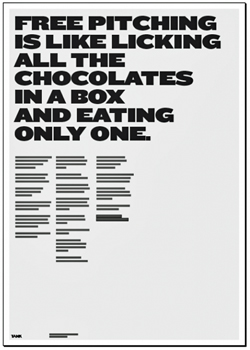
It would be churlish of me to suggest that there might be a parallel list in preparation of crap clients and inept agencies. There isn’t, not yet anyway. But at least it’s time to acknowledge that there should be new rules for pitches, or best practice guidelines at least. Pitches are not free, and only a foolish client imagines they are and abuses the process. Sadly for our sector, this happens every day. And it’s time someone published the definitive guide to being a good client (SOFII is in the process, see here).
Of course, as a disclaimer, all the foregoing is just my opinion.
On the subject of naming names, the legendary consultant mentioned above was the late Redmond Mullin. And the ‘best of the best’ client is, of course, Giles Pegram of the NSPCC. I can identify him comfortably now, despite his embarrassment, as he is now retired and for his sins has become a consultant himself.
Will the next generation aspire so high?
© Ken Burnett 2010
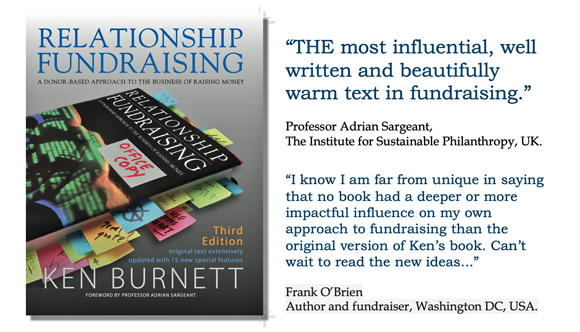
Ken Burnett’s books on fundraising and communication include the classic Relationship Fundraising: a donor-based approach to the business of raising money, Friends for Life: relationship fundraising in practice and The Zen of Fundraising. To fill the gaps in your library, click here.
|
|
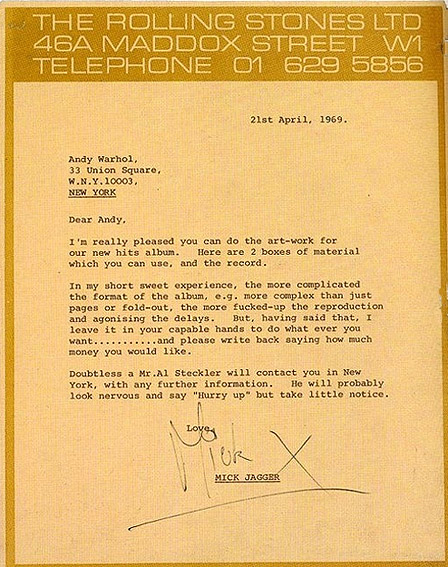 Dream letter: Is this – apart of course from the strong language and excessive ellipsis – the perfect client letter to the perfect consultant? I mean, how often do you get, ‘...do whatever you want and please say how much money you would like.’? Dream letter: Is this – apart of course from the strong language and excessive ellipsis – the perfect client letter to the perfect consultant? I mean, how often do you get, ‘...do whatever you want and please say how much money you would like.’?
A fundraising dream team for the UK
Here are some of the roles that might make my fundraising dream team though I’ve decided to resist naming specific individuals as I can’t include everyone who deserves mention. A healthy sign this, I think (see readers’ comments).
The opportunity spotter: I’d talk to one of these right at the start of whatever campaign I’m thinking of launching. The ability to lift sights above the day-to-day is a hallmark of a great client and the agency opportunity spotter helps them do that. It helps if this team member is also an ace fundraiser in his or her own right, and someone who really knows donors: how they think and behave. I’ve often wondered why a good charity client would pay much attention to a senior adviser who is not first and foremost a fundraiser.
The planner/researcher: Most projects fail through lack of ‘doing the homework’. This role needs cool logic plus deep experience. A slightly nerdy attention to detail helps, as does the ability to think in three dimensions.
The implementers: These are the organisers, the people who do. Call them your account handlers if you will, but think of them as an extension of your organisation and treat them very well, for most other clients will treat them casually, if not shabbily. So if you treat them right they'll die for you, gladly. They are the front-line foot soldiers and they get things done. The good ones are worth their weight in precious jewels. A good client treats them accordingly.
The creative spark: Just sit back and let them weave their magic. But give them room to work so their ideas can flow and grow.
The writer: Real heart-in-your-mouth, utterly credible human drama is what they must provide, day after day – a rare skill. At its best it’s truly thrilling to work with a great writer. Words matter, so cultivate your storytellers and abolish bad use of language in your organisation. Most clients can’t write but on the slenderest of evidence convince themselves they can. So the best clients cultivate self-awareness. If you want to be a copywriter, don’t be a client. Simple.
The producer: The steady backroom expert who gets the job delivered, physically, as expected, on target, on spec, on time, on budget. Rare and well worth nourishing, these people.
The data-master: Few agency people really get data and donors. If your agency doesn’t get data, change your agency.
The media planner/creative results analyst: Immaculate record keeping shows where your message should and shouldn’t be, with which offer version in what format, and when.
The safe pairs of hands: British clients are lucky to have such wide choice of safe hands to stand alongside them as their agency. The good client values and respects this choice and never abuses the power it gives them as client.
The quarterly reviewer: These are the challengers, who you probably can’t afford to have at every meeting but you build in time and budget for at intervals because you can’t afford not to. They may not always be comfortable. Nor should they be.
The close-to-heart consultant: For the rare really good client, these are like a second skin. Anyone who thinks they don’t need one is probably a fool – or perhaps a genius. It’s not a case of one mind in two bodies, rather a pairing that operates like binary planets. But it takes time and talent to build the trust. Thankfully there are quite a few really good, experienced consultants around in the UK now.
The genius inspirer: The master motivator. Of inestimable value for the really ambitious long-term campaign. There aren't many of these around, (though email me if stuck and I’ll try to point you in the right direction).
And the dream client?: He or she is still to be appointed. Candidates can pitch for the position, at their own expense of course. The competition will be many and hot, so an ‘all whistles and bangs’ presentation is recommended. Apply opposite.
|
